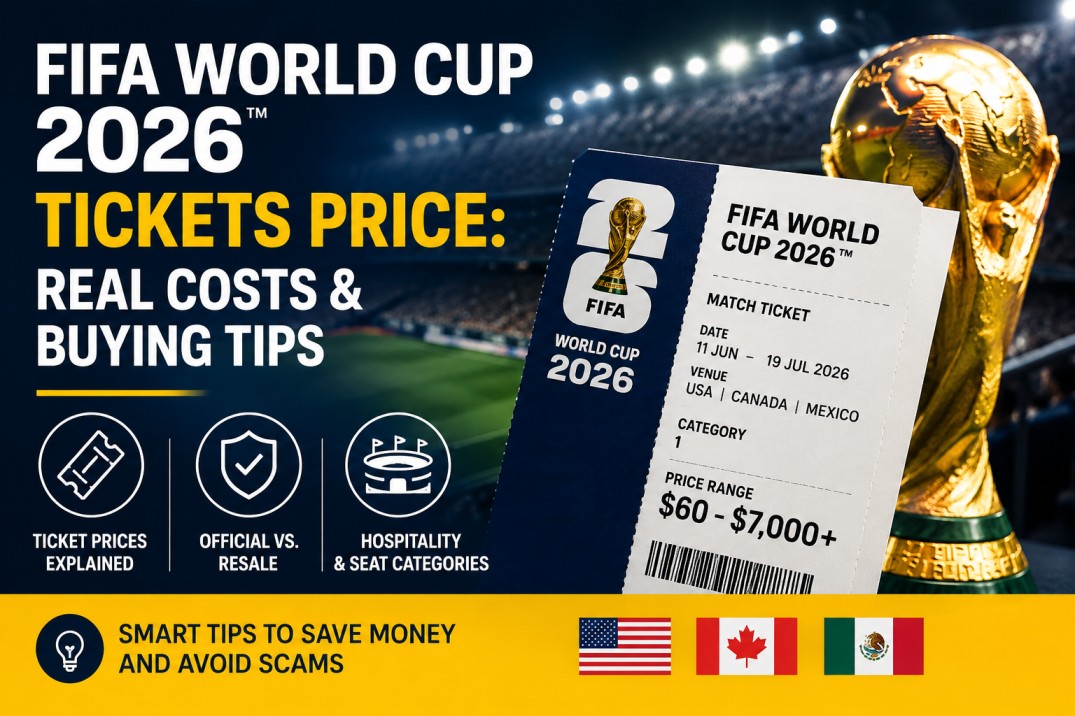
The FIFA World Cup 2026 tickets price can look simple in search results, but the real answer is more complicated. One fan may see a low entry price and think the tournament is affordable. Another may check a knockout match or the final and wonder how a football ticket became a luxury purchase.
Both reactions can be true.
World Cup tickets are not priced like a normal league match. The cost depends on the match stage, seat category, host city, sales phase, demand, availability, hospitality options, and whether the ticket is bought through an official channel or a resale marketplace.
That is why this guide focuses on the part fans actually care about: what you may pay, why prices move, which tickets are safer to buy, and how to avoid turning a dream tournament into a bad financial decision.
The FIFA World Cup 2026 tickets price can range from lower official entry tiers to much higher prices for knockout matches, hospitality packages, resale listings, and the final. The final cost depends on the match stage, seat category, host city, demand, and ticket source. Fans should start with official FIFA ticket channels and budget for travel and accommodation before buying.
FIFA World Cup 2026 Tickets Price: What Is the Starting Point?
FIFA has introduced a Supporter Entry Tier priced at $60 per ticket, available for all 104 matches, including the final. That does not mean every fan can simply buy a final ticket for $60 whenever they want. It means FIFA has created a limited, lower-priced tier tied to supporter access, availability, and specific ticketing rules.
For regular fans, the broader FIFA World Cup 2026 tickets price range depends heavily on the match and seat category. Early group-stage matches are usually the most realistic entry point. Knockout matches cost more. The final sits in its own category.
So, when someone asks, “How much are FIFA World Cup 2026 tickets?” the honest answer is:
Some tickets may start at around $60, but many will cost far more once demand, seating category, match importance, and availability are factored in.
FIFA has also announced a Supporter Entry Tier priced at $60 per ticket for all 104 matches, including the final, through its official pricing tier announcement.
That difference matters. A low headline price can be real and still not represent what most fans will actually see for the match they want.
Why Ticket Prices Vary So Much
The biggest mistake fans make is treating a “World Cup ticket” as one product. It is not.
The FIFA World Cup 2026 tickets price can change for reasons that are not always obvious at first glance. The table below shows the main factors that can make one ticket feel affordable while another becomes a premium purchase.
| Pricing Factor | Lower-Cost Scenario | Higher-Cost Scenario | What Fans Should Watch |
|---|---|---|---|
| Match Stage | Group-stage matches usually offer the most realistic entry point. | Knockout matches, semi-finals, and the final can push prices much higher. | Do not use final-ticket prices as the average tournament price. |
| Seat Category | Upper-level or less central seats may be more affordable. | Lower-bowl, central, premium, or hospitality seats can cost far more. | A better view often changes the price more than fans expect. |
| Host City | Cities with easier travel, more hotel supply, or lower local demand may reduce total trip cost. | Major tourism markets or expensive event cities can raise the full budget quickly. | A cheap ticket can still become expensive once hotels and transport are included. |
| Teams Involved | Lower-demand matchups may be easier to access. | Host nations, major football countries, and teams with traveling fan bases can drive demand up. | Prices can change after the draw confirms who plays where. |
| Ticket Source | Official sales phases may offer clearer pricing and safer access. | Resale listings, premium seats, and hospitality packages may be much more expensive. | Always separate official face value from resale asking prices. |
| Buying Timing | Early official access or less competitive sales windows may help flexible fans. | Waiting until demand is clearer can mean fewer seats and higher pressure. | Waiting gives more information, but it can also reduce choice. |
Fans should always confirm prices, sales phases, availability, and ticket rules through the official FIFA ticketing information before buying.
A group-stage ticket for a lower-demand match is a very different product from a semi-final ticket, a host-nation match, or the final. The same tournament contains dozens of different price realities.
A few things usually shape the price.
The match stage is the first factor. Group-stage matches tend to be cheaper than knockout games because the stakes are lower and there are more of them. Once the tournament moves into elimination football, demand usually becomes sharper.
The teams involved also matter. A match involving a major football nation or host country can attract huge demand, especially if the fan base travels well.
The seat category changes the price, too. A better view, a lower-bowl seat, or a premium location will usually cost more than a higher or less central seat.
Then there is timing. A ticket available during one sales phase may not be priced the same way later. FIFA has said it may adjust prices during sales phases based on demand and availability, even though it describes the approach as variable pricing rather than fully automated dynamic pricing.
That distinction is important for fans. Prices may change, but they are not supposed to update automatically minute by minute, as some airline or hotel systems do.
FIFA World Cup 2026 Ticket Prices: Official Tickets vs Resale
A lot of price confusion comes from mixing official ticket prices with resale prices.
Official ticket prices are set by FIFA’s ticketing system or hospitality channels. These are the safest places to start because the ticket source is clear.
Resale prices are different. They may be higher, lower, or more volatile depending on seller behavior, demand, timing, and platform rules. A resale listing does not always represent the official face value of a ticket. It only shows what someone is asking at that moment.
That is why fans should be careful when comparing numbers online.
If one website says a ticket starts at $60 and another shows a listing for several thousand dollars, they may both be showing real information from different parts of the market. One may refer to an official entry tier. The other may refer to resale, premium seats, hospitality, or a high-demand match.
For buyers, the safest rule is simple: check the official FIFA ticketing route first, then compare carefully if you look elsewhere.
Are FIFA World Cup 2026 Tickets Dynamically Priced?
This is one of the most important questions around the tournament.
FIFA says it may adjust prices during sales phases based on demand and availability, while describing this as variable pricing rather than fully automated dynamic pricing, according to its official ticket pricing explanation.
That may sound like a small wording difference, but it matters.
For fans, the practical takeaway is this: ticket prices are not necessarily fixed forever. They can change across sales windows. A match that looks affordable at one point may not remain affordable later, especially if demand rises after team qualification, the draw, or a major release of ticket inventory.
So yes, fans should expect movement in ticket prices. But they should also understand that FIFA’s official explanation separates variable price adjustments from automatic real-time dynamic pricing.
Either way, waiting is not risk-free.
How Much Could FIFA World Cup 2026 Final Tickets Cost?
The final is not a fair benchmark for the average FIFA World Cup 2026 tickets price.
It is the biggest match in football, played in one of the most expensive event markets in North America. Demand will come from fans of the finalists, neutral supporters, corporate buyers, hospitality customers, collectors, and people who simply want to say they were there.
That combination makes the final completely different from a regular group-stage game.
Official lower-price tiers may exist, but availability is the problem. The more realistic expectation is that many final tickets, premium seats, hospitality packages, and resale listings can reach very high prices.
If your main goal is to experience the World Cup atmosphere, the final is usually the least budget-friendly way to do it. A group-stage match, a round-of-32 match, or a less hyped city matchup may offer a much better value.
The final is a dream ticket. It is not the place to judge the affordability of a normal tournament.
What Are Hospitality Packages?
Hospitality packages are premium matchday products. They usually include a ticket plus extra benefits such as premium seating, food and beverage, lounges, entertainment, private or shared suite access, or a more controlled matchday experience.
They are not meant to compete with the cheapest regular tickets. They are a different product for fans or businesses that want comfort, access, and certainty.
For some buyers, hospitality makes sense. It can reduce stress, provide better seating, and create a more complete event experience.
For most budget-conscious fans, regular tickets are usually the better target. Paying for hospitality when you only want to be inside the stadium can make the World Cup far more expensive than it needs to be.
Before choosing hospitality, ask yourself one question:
Are you paying for football, or are you paying for the whole premium event around it?
That answer will tell you whether the higher cost makes sense.
The Real Cost Is Not Just the Ticket
A common World Cup mistake is budgeting for the ticket and forgetting the trip.
The actual cost of attending a match may include flights, fuel, hotels, local transport, parking, food, mobile data, travel insurance, and time away from work. For international visitors, currency conversion and payment fees can also matter.
Hotels can be the biggest surprise. A ticket may look affordable, but if the host city is expensive during match week, the total trip cost can rise quickly.
That is why a $100 or $200 difference in ticket price is not always the main issue. Sometimes the smarter choice is the city with cheaper accommodation, easier transport, or a shorter stay.
A good World Cup budget should include three layers:
The ticket cost.
The travel and accommodation cost.
The matchday spending buffer.
If you only plan the first one, the final number can hurt.
Cheapest Way to Attend the 2026 World Cup
The cheapest way to attend is usually not to chase the biggest match.
A flexible fan has a major advantage. If you are open to different cities, different teams, and earlier tournament stages, you have a better chance of finding a reasonable total cost.
The most affordable route will usually look something like this:
Choose a group-stage match instead of a knockout match.
Avoid treating the final as your default target.
Watch official ticket releases closely.
Compare host cities by hotel and travel cost, not just ticket price.
Stay away from panic-buying expensive resale listings.
Be ready to buy when a suitable official option appears.
The goal is not to find the cheapest ticket on the internet. The goal is to find a real ticket, from a safe source, at a price that still makes sense after travel costs.
That is a very different mindset.
When Should Fans Buy Tickets?
There is no perfect time for every fan.
Buying earlier may give you better access and more certainty, but you may not know the final team matchups yet. Waiting may give you more information, especially after the draw, but availability can shrink and demand can rise.
If you care more about being at the tournament than seeing one specific team, buying based on city, date, and budget can be smart.
If you only want to follow a particular country, you may need to wait for more schedule clarity. That can be worth it, but it also gives you less control over price.
The right timing depends on your priority.
Some fans buy certainty. Others wait for information. Both choices involve risk.
How to Avoid Overpaying or Getting Scammed
World Cup ticket demand creates a perfect environment for scams. Fake ticket websites, copied branding, social media ads, unrealistic discounts, and unofficial sellers can all appear around major tournaments.
Do not assume a website is safe just because it looks professional. Scammers often copy logos, colors, layouts, and checkout flows.
A few rules can protect you:
Start with FIFA’s official ticketing pages.
Be careful with links from social media ads.
Check the domain carefully before entering payment details.
Avoid sellers asking for direct bank transfers, crypto payments, or screenshots.
Do not rush because a page says “only a few left.”
Treat huge discounts on high-demand matches with suspicion.
A cheap fake ticket is still expensive if it gets you nothing.
Fans should also be careful with resale listings. Some may be legitimate, but the price can be inflated or disconnected from official face value. If you use a resale route, make sure you understand the platform’s buyer protection and ticket delivery rules.
Why Ticket Prices May Feel Unfair
Many fans will look at World Cup prices and feel frustrated. That reaction is understandable.
The tournament has a global fan base, but the 2026 market includes major North American stadiums, corporate demand, premium hospitality, international travel, and high event pricing expectations. The result is a ticket market that may feel very different from what some fans expect from football.
That does not mean every ticket will be impossible to afford. It means fans need to separate three different things:
Official entry-level access.
Typical available seats for popular matches.
Premium, hospitality, and resale prices.
When those three get mixed together, the whole market looks impossible to understand.
The smartest buyers will not chase every headline. They will focus on the match they actually want, the source they trust, and the full budget they can live with.
FIFA World Cup 2026 Tickets Price: Smart Budget Examples
A budget fan should think in scenarios.
If you live near a host city and only want to attend one group-stage match, your ticket may be the main cost. That is the best-case scenario.
If you need to travel to another city, stay in a hotel, and eat out for two or three days, the ticket may become only a small part of the total.
If you are flying internationally, chasing a major team, or targeting a knockout match, the total cost can rise quickly.
If you want hospitality or the final, you should treat it as a premium trip from the beginning.
The worst plan is to buy an expensive ticket first and only later realize that hotels, flights, and local transport make the trip unrealistic.
Budget backward. Decide what the full trip can cost, then see what kind of ticket fits inside that number.
Final Thoughts
The FIFA World Cup 2026 tickets price is not one fixed answer. Some tickets may start at accessible entry levels, but many fans will face higher prices depending on the match, category, city, demand, sales phase, and ticket source.
The best approach is calm and practical. Start with official channels. Understand the difference between regular tickets, hospitality, and resale listings. Do not use the final as your average price benchmark. Add travel costs before deciding whether a ticket is really affordable.
For most fans, the smartest World Cup experience will not come from chasing the most famous match. It will come from finding the right balance between price, safety, location, and atmosphere.
That is how you turn the 2026 World Cup from a stressful purchase into a trip that actually makes sense.
Disclaimer: Ticket prices, availability, sales phases, hospitality options, and resale rules may change as FIFA updates its official ticketing process for the 2026 World Cup. This guide is for informational purposes only and should not be treated as a final price guarantee. Always check FIFA’s official ticketing channels before buying.
What is the FIFA World Cup 2026 tickets price?
The FIFA World Cup 2026 tickets price depends on the match, seat category, demand, sales phase, and ticket source.
Some official entry-level tickets may start lower, but knockout matches, premium seats, hospitality packages, resale listings, and the final can cost much more.
Why do FIFA World Cup 2026 ticket prices vary so much?
Prices vary because a group-stage match is not priced like a semi-final, final, or high-demand match involving a major national team.
Seat category, host city, availability, hospitality access, and resale demand can all change what fans actually pay.
Where should fans buy FIFA World Cup 2026 tickets?
Fans should start with FIFA’s official ticketing channels because that is the safest way to check availability, rules, and official pricing.
Resale listings may appear elsewhere, but buyers should be careful with unfamiliar sites, inflated prices, fake pages, and unclear delivery terms.
Are FIFA World Cup 2026 tickets dynamically priced?
FIFA describes its approach as variable pricing, meaning prices may change across sales phases based on demand and availability.
That is different from a fully automated dynamic pricing system where prices constantly change in real time, but fans should still expect prices to move.
What is the cheapest way to attend the 2026 World Cup?
The cheapest approach is usually to target group-stage matches, stay flexible on host city and date, and avoid chasing the final or the most in-demand teams.
Fans should also compare travel and hotel costs because a cheap ticket in an expensive city may not be cheap overall.