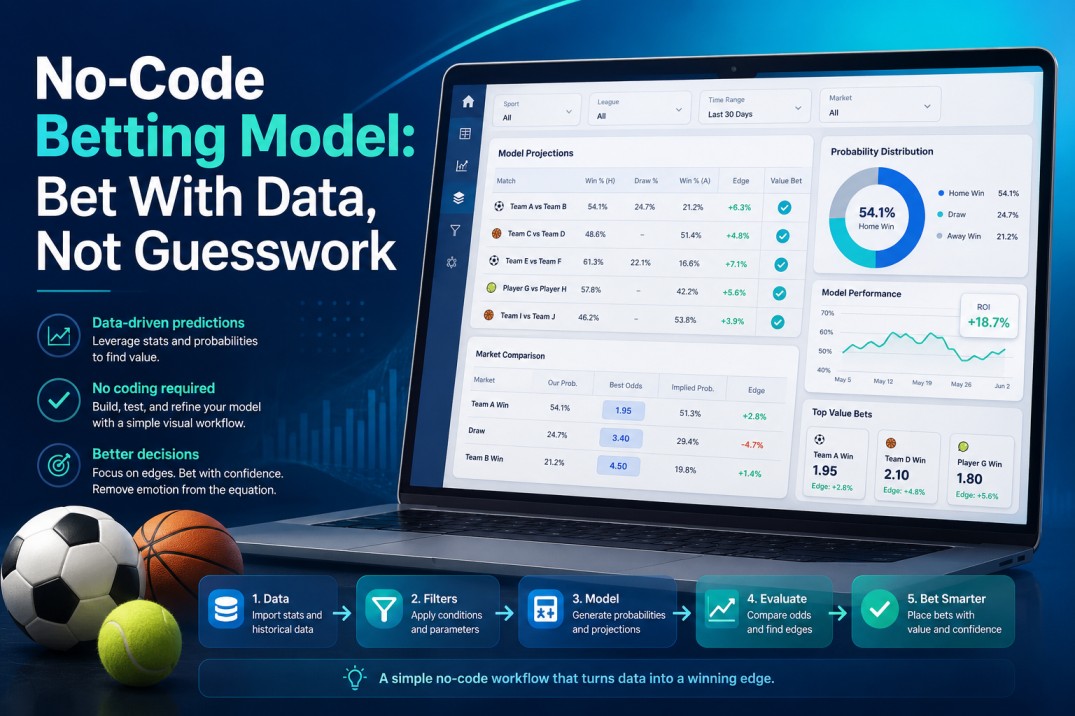
A no-code betting model helps bettors use data, spreadsheets, and simple rules to make more structured betting decisions without writing code. Building one sounds technical, but it does not have to start with programming. A useful model can begin with free data, clear filters, and a spreadsheet that compares your own view of probability against the bookmaker’s price.
A no-code betting model is a simple, repeatable process for comparing your own estimate of an outcome against the odds offered by a bookmaker. By using free data sources, spreadsheets, clear betting rules, and regular result tracking, punters can build a more disciplined betting approach without writing code or relying only on gut feeling.
What a Betting Model Actually Is
Most people assume that building a betting model requires a technical background. They picture spreadsheets filled with complex formulas, Python scripts running overnight, or a maths degree gathering dust on the wall. The reality in 2025 is very different. Platforms like Arena Plus have made it easier than ever to act on data-driven decisions quickly, with competitive lines and a broad range of markets to work with. Free tools, publicly available data, and a bit of patience are genuinely all you need to start making smarter, more systematic bets.
At its core, a betting model is just a repeatable process for evaluating whether a bookmaker’s price represents good value. You are not trying to predict every outcome. You are trying to find situations where your estimate of probability is more accurate than the bookmaker’s. Do that consistently, and the profits follow.
Start Narrow and Build Outward
Start with one market. Trying to model every sport and every league simultaneously is how people give up after a week. Pick something you already know well, whether that is Premier League match results, NBA totals, or tennis first sets. Familiarity with the sport means you have a natural sense for when a line looks off, which is more useful than raw data at the beginning.
Sites like Football-Data.co.uk, Basketball-Reference, and Oddsportal offer historical results and odds dating back years, all free and downloadable as CSV files. You do not need to scrape anything or write a single line of code. Open the file in Google Sheets or Excel, and you are already working.
Building the Rules and Tracking Results
From there, the model is just a set of rules. For example, you might look at how home teams with three or more wins in a row have performed against the spread when traveling less than 200 miles. Filter your data by those conditions, calculate the win rate, compare it to the implied probability of the odds, and you have a basic edge analysis. If home teams in that situation cover 58% of the time and the odds imply 52%, you have something worth tracking.
One of the biggest mistakes new model-builders make is treating a single backtest as gospel. A sample of 30 games tells you almost nothing. You need hundreds of observations before any pattern becomes statistically meaningful. Keep a running log of every bet placed based on your model and review it regularly.
Layering in More Variables Over Time
As your confidence grows, you can layer in more variables. Expected goals data, travel schedules, rest days, weather, and referee statistics are all freely available and can significantly sharpen your filters. The honest truth is that a simple, well-maintained model will outperform most gut-feel betting over time. You do not need to be a data scientist. You need to be disciplined, curious, and willing to let the numbers override your instincts when they conflict. That last part is harder than it sounds, but it is where the real edge lives.
What is a no-code betting model?
A no-code betting model is a repeatable betting process built with tools like Google Sheets or Excel instead of programming.
It helps punters compare their own probability estimates against bookmaker odds using data, filters, and tracked results.
Do you need coding skills to build a betting model?
No. A basic betting model can be built without coding by using free sports data, downloadable CSV files, spreadsheets, and simple rules.
The most important skills are discipline, patience, record-keeping, and understanding the sport or market you are analysing.
What data should a beginner betting model use?
Beginners should start with simple data such as results, odds history, home and away records, recent form, totals, spreads, or head-to-head performance.
It is better to model one sport or market well than to track too many leagues and bet types at once.
How does a betting model find value?
A betting model looks for value by comparing its estimated probability of an outcome with the implied probability in the bookmaker’s odds.
If the model suggests an outcome is more likely than the odds imply, that bet may be worth tracking or considering.
Why should you start with one betting market?
Starting with one market keeps the model easier to test, understand, and improve.
Trying to analyse every sport, league, and bet type at once usually creates noise and makes it harder to see whether your rules actually work.
Are betting models guaranteed to make a profit?
No. A betting model can make decisions more structured, but it cannot guarantee profit.
Results depend on data quality, sample size, market efficiency, discipline, and responsible bankroll management.