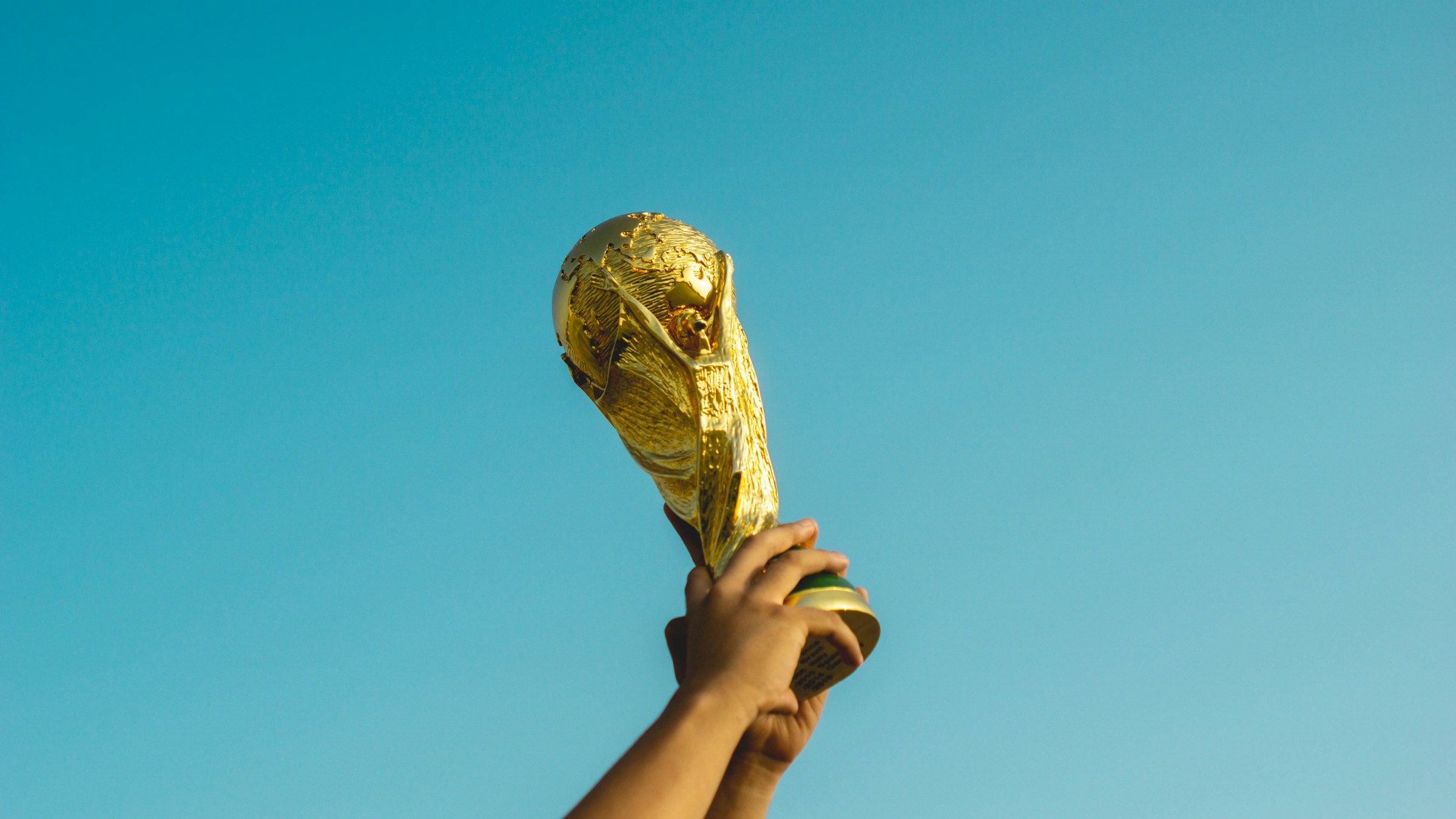
The strange thing about the 2026 World Cup is how early the emotional gravity begins to build. Long before squads are finalized or stadiums fill up, people start projecting stories onto the tournament. Some of them stick. Some disappear overnight. But the betting markets? They react to all of it.
You can see it in the way conversations shift every few weeks, a player injury here, a coaching decision there, a single international break changing how entire nations are perceived.
The World Cup has always been shaped by momentum as much as tactics, and this cycle feels especially vulnerable to narrative swings, maybe because the tournament itself will look different. Bigger. Louder. More fragmented across three countries.
And the markets know it.
The 2026 World Cup is already shaping major betting conversations through storylines around Messi and Ronaldo, host nations, player injuries, and the Brazil-Argentina rivalry. This article looks at those market narratives from an informational angle, with a focus on legal awareness, age restrictions, and responsible gambling.
1. Messi and Ronaldo’s Last World Cup Is Changing Everything
There’s no separating emotion from Lionel Messi and Cristiano Ronaldo at this point. Maybe there never was. But heading toward what most people expect to be their final World Cup appearances, sentiment has started bleeding directly into market behavior in a way that feels unusually obvious.
That emotional pull is already influencing 2026 World Cup betting discussions around Argentina and Portugal. Not subtly, either. Public interest around both teams spikes almost instantly whenever either player speaks, scores, or even hints at legacy. You can feel the weight of it in coverage, in social chatter, in pricing conversations that drift away from pure football logic.
Argentina, especially, finds itself in a strange position because Messi’s presence alters the emotional temperature of the entire tournament. The squad is still excellent. That matters. However, some of the support surrounding them at the 2026 World Cup now feels less analytical and more cinematic, almost like fans are betting on the final scene they want rather than the one they realistically expect.
Portugal carries a slightly different energy. Ronaldo remains influential, but the team has evolved around him over the last few years. There’s younger attacking talent. More tactical flexibility. Still, his name dominates the emotional framing of Portugal’s campaign because global football audiences are wired to see him that way. That doesn’t disappear just because a tournament begins.
Bookmakers routinely weigh emotional attachment to players and teams alongside more measurable factors. The difficult part is separating sentiment from actual tournament probability, and that line can blur around iconic athletes. It always has.
2. Host Nations Are Quietly Reshaping the Entire Conversation
Host countries often benefit from home advantage at the World Cup, and several have gone deeper than expected on home soil. Familiarity counts for something in tournaments this demanding. So does crowd energy. Travel route familiarity. Food. The comfort of routine. Players notice those things even when they pretend not to.
Now stretch that dynamic across the United States, Canada, and Mexico simultaneously. That’s what makes 2026 unusual from a market perspective. Nobody has really seen a World Cup structured quite like this before, and Betting markets are being asked to price in unusual variables that have little direct precedent at this scale.
The United States continues to draw the most attention because its football culture has shifted noticeably over the last decade. Stadium attendance is climbing. International matches feel bigger now. Less novelty, more expectation.
By the time the tournament arrives, those crowds could become genuinely difficult environments for visiting teams, especially once knockout tension takes over. Mexico’s influence feels more emotionally immediate.
Soccer narratives indicate that the 2026 World Cup atmosphere in Mexico will carry a different kind of intensity, louder, sharper, more relentless. Opponents will feel that. Canada is harder to project because the football culture is still developing, but even there, the novelty of hosting could generate momentum that traditional models struggle to quantify cleanly.
That’s really the point. The market doesn’t love uncertainty, yet this tournament keeps introducing new forms of it.
3. Injuries Are Already Distorting the Market
Every World Cup cycle eventually turns into a physical race against time. Some players arrive exhausted. Some arrive injured. Others spend months being monitored like fragile machinery because one bad tackle in May can reshape an entire tournament in June.
Spain is dealing with that anxiety around Lamine Yamal right now. The concern isn’t only about talent. It’s about identity. Spain’s attack has become increasingly dependent on unpredictability, movement, and one-versus-one creativity, and Yamal brings all of that naturally. Without him, the structure still exists. The fluidity doesn’t quite feel the same.
That uncertainty matters in the market because tiny differences often decide elite international football. One player capable of destabilizing a defensive block changes how opponents prepare. Changes how managers rotate. Changes how bookmakers calculate ceilings.
Brazil faces a similar tension surrounding Neymar. There are very few players in world football who can change the emotional confidence of an entire nation the way he does. Brazil remains talented, balanced, and tactically stronger than some recent versions. None of that disappears if he misses time. But the attacking ceiling changes immediately because a Brazil side without Neymar loses a layer of creativity, experience, and unpredictability in the final third.
Bookmakers track this obsessively now. In some cases, fitness reports move markets faster than tactical analysis. Expanded squads help absorb certain absences, sure, but there’s still no real replacement for truly elite players once a tournament begins unraveling emotionally.
4. Brazil and Argentina Still Draw Attention
Some rivalries age. Brazil versus Argentina somehow expands, maybe because every generation reinvents it slightly differently. Maybe because international football still feels most emotionally authentic in South America. Whatever the reason, the rivalry keeps drawing global attention, and the betting markets reflect that almost immediately whenever either nation plays.
Argentina’s World Cup win in Qatar complicated the old hierarchy, and is impacting betting odds. For years, Brazil carried the default aura of inevitability entering tournaments. Not dominance exactly, but expectation. Argentina shifted that balance by winning the biggest prize in the sport while also attaching the achievement to Messi’s legacy, which amplified everything around it.
Now the conversation feels less settled. Brazil’s younger core continues evolving. The attacking talent is obvious, but there’s also more tactical discipline emerging than people sometimes acknowledge publicly. Argentina, meanwhile, sits in that dangerous space defending champions occasionally occupy, experienced enough to stay calm, but slowly transitioning toward a future that hasn’t fully arrived yet.
That tension creates intrigue. It also creates volatility in how people discuss both teams before a ball is kicked. Markets react to uncertainty because uncertainty attracts attention, and no international rivalry generates more sustained emotional investment than this one does.
Not consistently, anyway.
The Tournament Narrative Is Already Taking Shape
That’s probably the most important thing to understand about the 2026 World Cup right now: the tournament has already started emotionally, even if it hasn’t started competitively.
Messi and Ronaldo’s farewell arc. The strange psychology of three host nations. Injuries are hovering over contenders before summer even arrives. Brazil and Argentina are circling each other again, like they always do. None of these stories exists in isolation anymore. They shape perception. Then perception shapes the market. And once that cycle begins, it rarely slows down.
Why is the 2026 World Cup already shaping betting conversations?
The 2026 World Cup is already drawing attention because several major narratives are forming before the tournament begins.
Player legacies, host-nation pressure, injuries, and historic rivalries can all influence how people discuss the tournament and related market expectations.
How can host nations affect World Cup market narratives?
Host nations can affect tournament narratives because home crowds, travel conditions, familiarity, and public emotion all shape expectations.
The 2026 tournament is especially unusual because it will be shared across the United States, Canada, and Mexico.
Why do player injuries matter so much before a World Cup?
Player injuries matter because international teams often rely on a few elite players to define their attacking style, leadership, or tactical balance.
Even one uncertain fitness situation can change how a team is discussed before the tournament starts.
Should World Cup betting conversations be treated as predictions?
No. World Cup betting conversations should be treated as market discussion, not as guaranteed predictions.
Tournament football is unpredictable, and public narratives can change quickly after injuries, squad news, tactical changes, or early match results.
What should readers keep in mind when reading World Cup betting content?
Readers should treat World Cup betting content as informational and understand that markets reflect changing expectations, not certain outcomes.
Gambling laws, age limits, and platform access rules vary by location, so readers should always follow local regulations and approach gambling-related content responsibly.